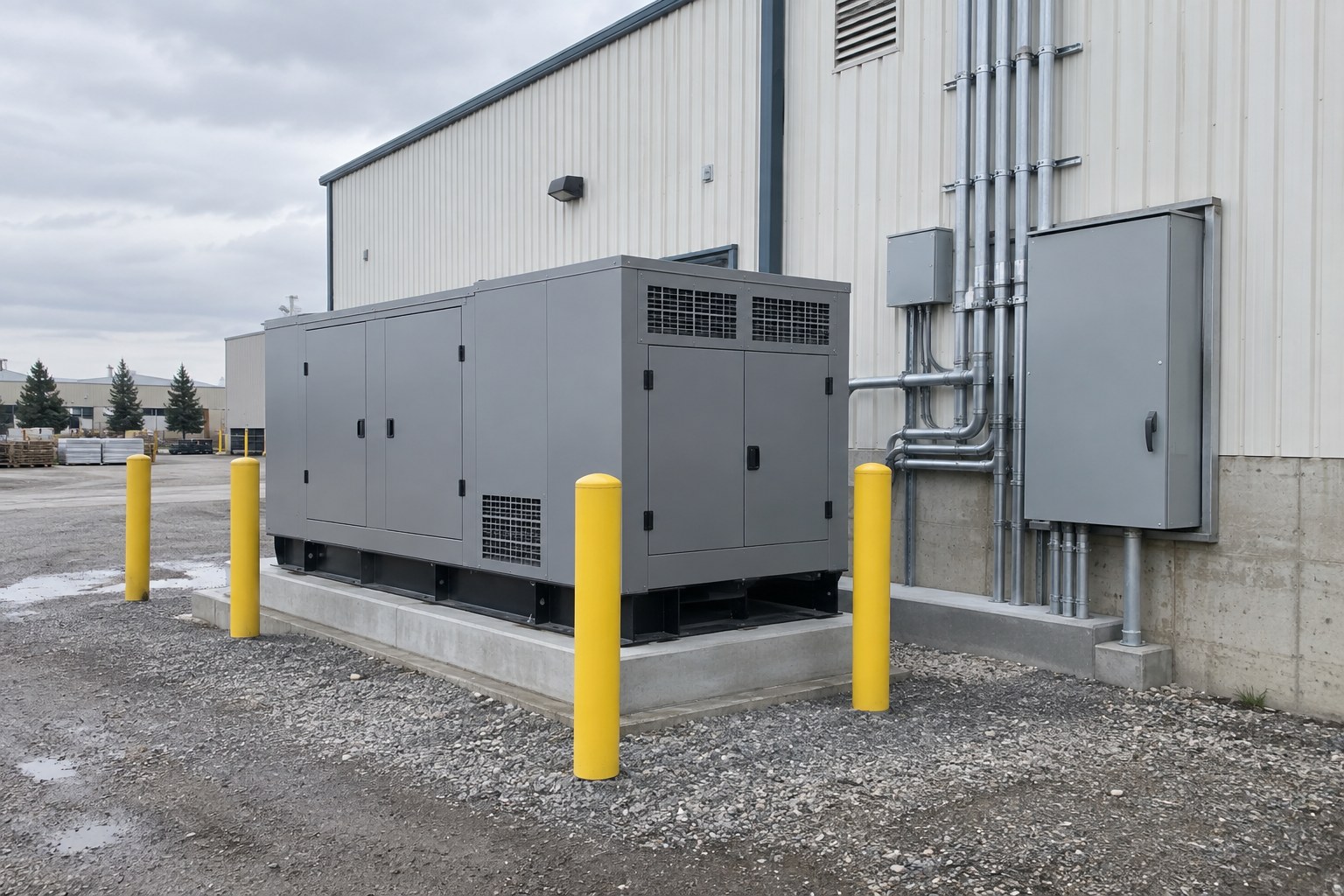
A practical scope, built around you.
The right starting point is what needs to keep running: a refrigeration system, building services, workshop equipment, essential household circuits or another defined set of loads. Those priorities shape the generator and the infrastructure around it.
Crestmere’s specialty is the connection between everyday electrical reliability and backup power. We consider the generator, the transfer arrangement, the site and the operating requirements together. New and suitable used equipment can be considered against the needs of the application; availability and condition are confirmed for the specific unit.
What the work can include
- Essential-load review and backup power planning
- New and used generator sourcing and supply options
- Diesel, natural gas and propane project planning
- Generator installation and electrical connections
- Transfer switches, distribution and control interfaces
- Maintenance planning, testing coordination and servicing
Start with the right information.
Provide the site address, supply voltage and phase if known, the loads to support and the required operating duration. Fuel availability, placement, access, sound considerations, maintenance clearance and local requirements all influence the scope. Standby and continuous-duty requirements are assessed separately; a standby rating is not a promise of continuous output.
Every property is different. The proposed work, schedule, access requirements and any specialist coordination are confirmed for your specific site.
How we plan the project
Decide what matters in an outage
Identify essential loads, starting characteristics and how long they need to operate.
Build the equipment brief
Define duty, voltage, fuel, transfer method, location and service expectations.
Coordinate the complete installation
Plan electrical work alongside fuel, civil work, lifting and other required disciplines.
Plan for the next outage
Agree commissioning, operating orientation and an ongoing maintenance and testing approach.
Common questions
Can you supply the generator as well as plan installation?
Generator supply can be included in the project discussion. The proposal should identify the equipment, condition, included accessories, installation scope and any exclusions.
Can you work with a generator I already own?
Share the model, serial number, data plates, available manuals and intended application. Electrical compatibility, duty rating, condition and the transfer arrangement need review before confirming a scope.
Do you service generators?
Generator servicing can form part of the maintenance scope. Include the make, model, fuel type, hours if known, service history and symptoms so the appropriate work and resources can be identified.
Is the biggest generator the safest choice?
Size alone does not make a system suitable. The load profile, starting demand, duty, fuel, transfer equipment and installation constraints need to be considered together.
Related electrical services
Ready to discuss the details?
Share the location, scope and timing. We’ll start with the details that matter.