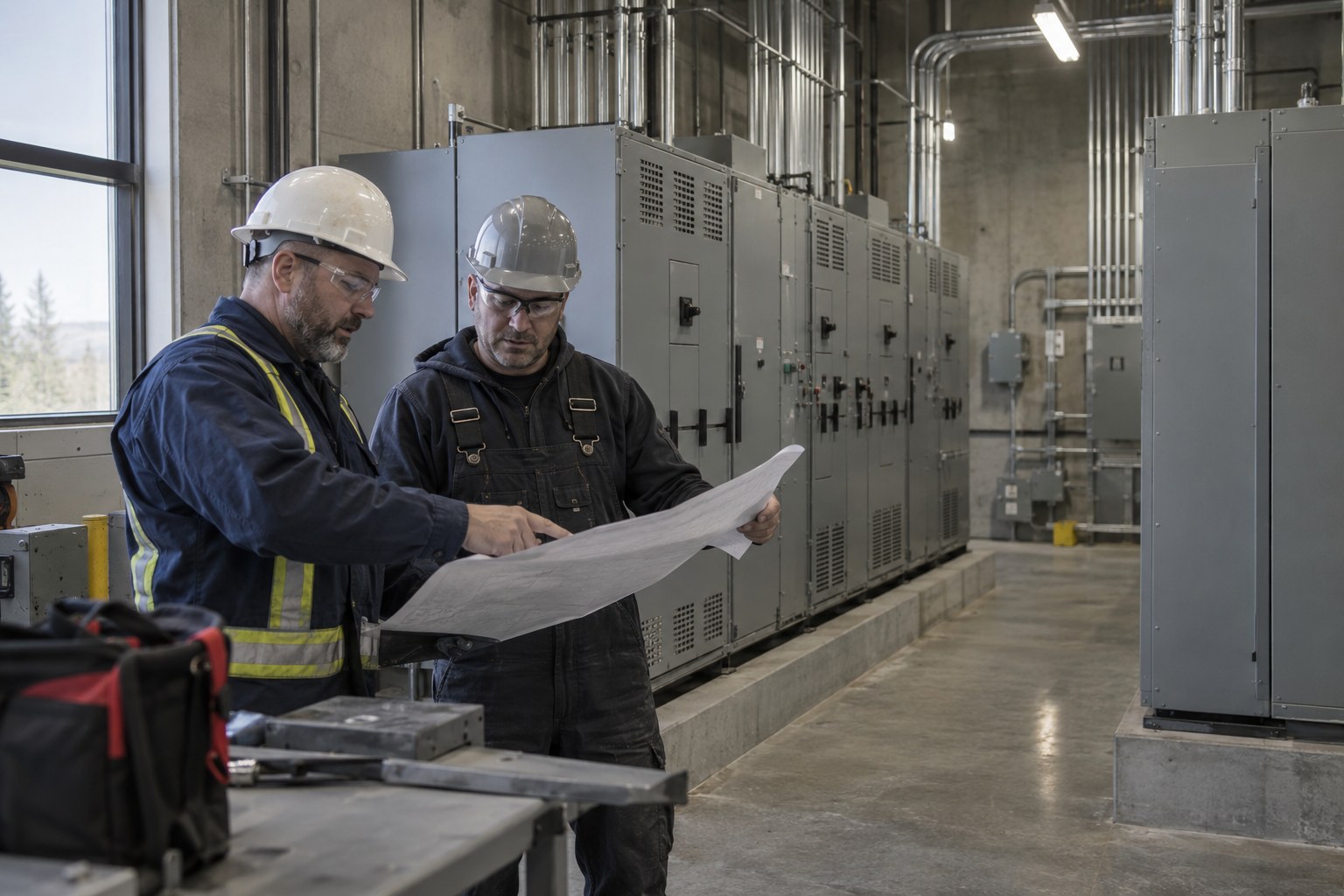
A practical scope, built around you.
Industrial electrical work starts with understanding what the equipment does, how it starts and what happens when it stops. Nameplate information, existing drawings and the sequence of operation all matter when planning an addition or resolving an ongoing problem.
We focus on practical coordination between electrical infrastructure and the equipment it serves. That includes identifying capacity constraints, planning access and shutdowns, and establishing the responsibilities of equipment suppliers, site operations and other project participants.
What the work can include
- Electrical supplies and connections for new equipment
- Distribution modifications and facility expansion work
- Disconnects, feeders and equipment-related circuits
- Lighting and electrical improvements in working facilities
- Fault investigation and planned corrective maintenance
- Backup power and transfer planning for essential operations
Start with the right information.
Start with the equipment list, voltage and phase, available drawings and your preferred shutdown window. Identify production-critical loads, site orientation requirements and any special environmental conditions. Engineering, controls integration and specialist work are defined separately where the project requires them.
Every property is different. The proposed work, schedule, access requirements and any specialist coordination are confirmed for your specific site.
How we plan the project
Understand the operation
Review the equipment, operating sequence, available supply and what must remain running.
Set the project boundaries
Identify electrical work, vendor responsibilities, specialist requirements and acceptance expectations.
Plan the interruption
Coordinate isolation, access, staffing and shutdown timing with the facility’s operating team.
Confirm readiness to return
Complete the agreed checks and handover before equipment is released back to site operations.
Common questions
What information should I send for a machine connection?
Send the manufacturer and model, clear equipment nameplate photos, installation documentation and the proposed location. Include any existing electrical drawings if available.
Can work be coordinated with a planned shutdown?
That is the preferred starting point for work affecting production. Timing depends on the scope, equipment, materials, site requirements and available resources.
Can a generator support an industrial load?
Potentially, but the review must consider motor starting, load steps, voltage, duty rating and the transfer arrangement. Generator nameplate kW alone is not enough to confirm suitability.
Related electrical services
Ready to discuss the details?
Share the location, scope and timing. We’ll start with the details that matter.